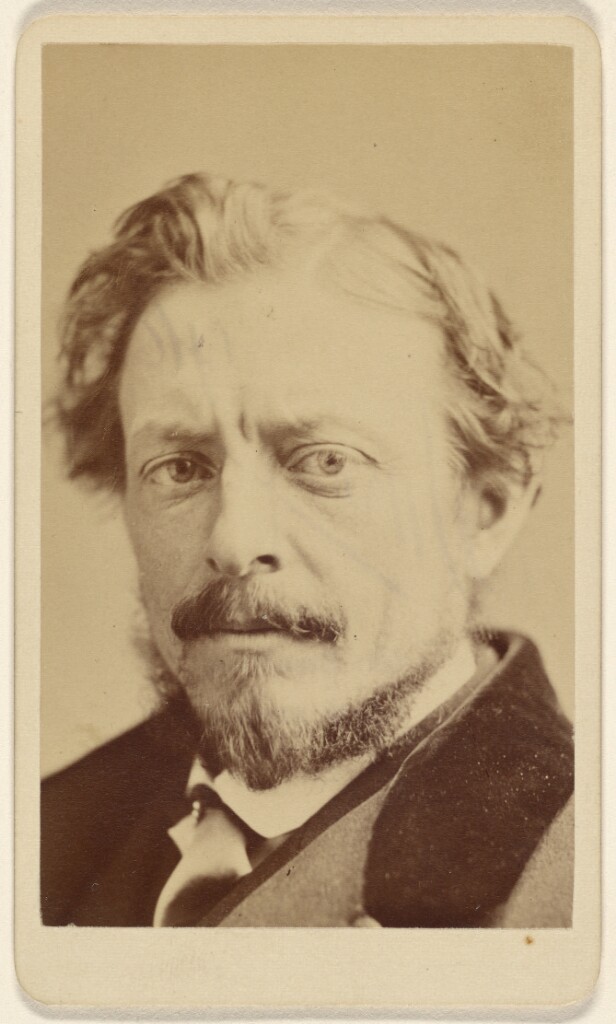
Samuel Colman was a 19th century painter, draftsman, designer, watercolorist, and printmaker. He is best known as a painter of expansive Hudson River School landscapes, but also scenes of the American West and Europe. His most recognizable work is unquestionably Storm King on the Hudson (1866), but he was a restless and varied artist who experimented with many different styles and media, including etching.
Colman was born in 1832, in Portland, Maine into a family of Swedenborgian booksellers.1 His father was a publisher and bookstore owner who is remembered by bibliophiles for publishing Hyperion, by a then little-known Henry Wadsworth Longfellow.2 His mother was a prolific author and editor of children’s books.
His uncle, William Colman, was the proprietor of Colman’s Literary Rooms, a New York bookseller that doubled as an art gallery.3 In 1825 the store would become the first venue to show works by Thomas Cole, the progenitor of the Hudson River School and among the most influential American artists of the first half of the 19th century.4
Colman spent his early years moving between Portland, Boston, and New York as his father pursued various business opportunities. While affording the family a high standard of living, these endeavors were broadly unsuccessful. By 1850 his father had ceased publishing under his own name and the family had permanently relocated to New York.5 The move may have been prompted by the failing health of William Colman and the subsequent liquidation of Colman’s Literary Rooms.6
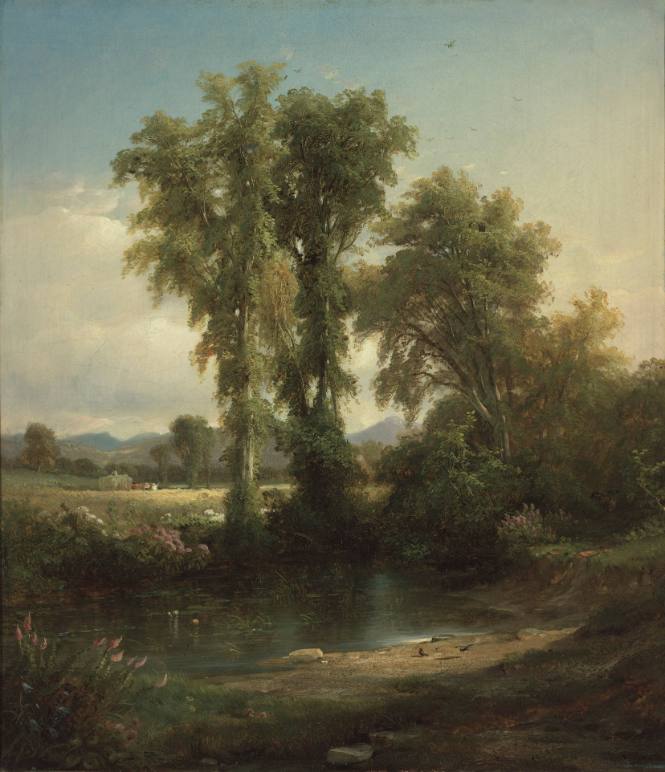
The younger Colman wasted little time establishing himself in the artistic circles of mid-century New York. He exhibited at the National Academy of Design for the first time in 18517 and by 1854 he was already an Associate Member.8 Among his friends were noted artists such as James David Smillie, Sanford Robinson Gifford, and Aaron Draper Shattuck, who went on to marry Colman’s younger sister Marian.9 Colman was also well acquainted with Asher B. Durand, the elder statesman of the New York scene, and painted alongside him on at least one trip to the White Mountains.10 Colman’s earliest works bear a strong resemblance to Durand’s.
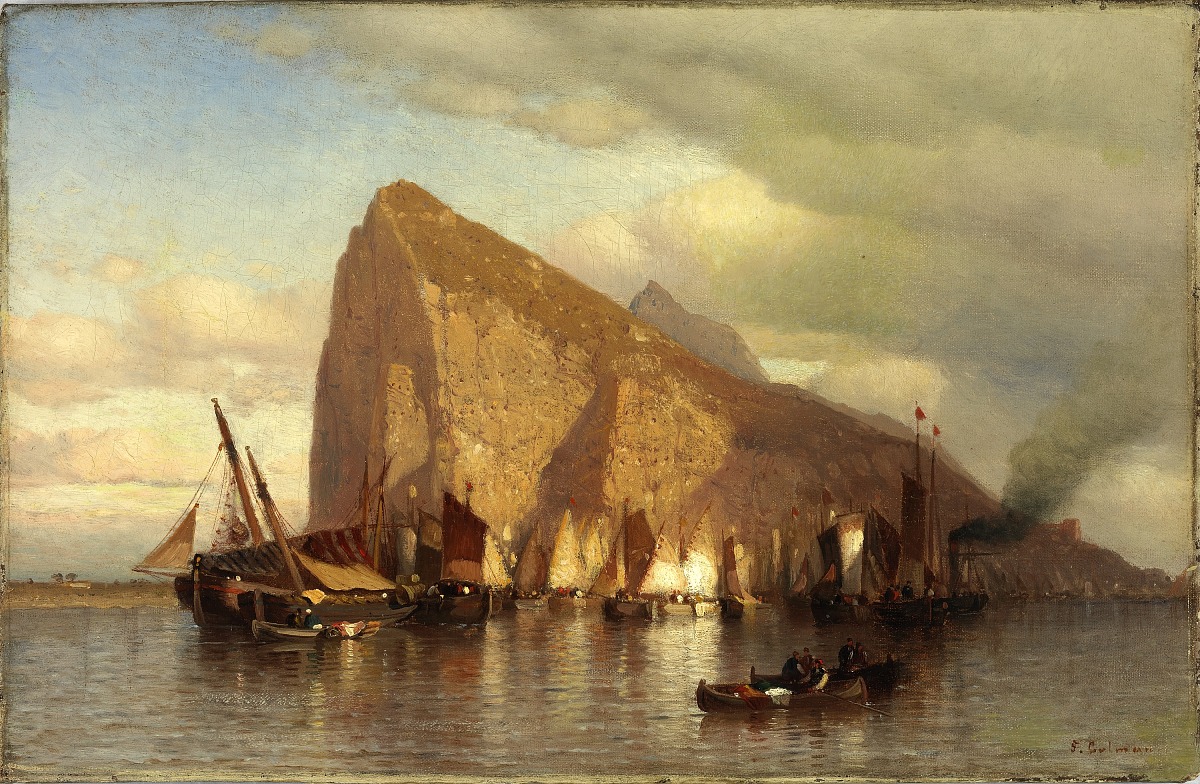
In 1860, at the age of 28, Colman departed on a grand tour of Europe.11 While he was abroad, the Civil War began. He visited Spain and France, then made the decision to cut the journey short.12 The trip, however abbreviated, would inspire many of Colman’s early masterpieces, including Clearing Storm at Gibraltar. After returning, it’s unclear how Colman avoided the draft, though it’s plausible his father or wealthy friends paid the $300 “commutation fee.” Meanwhile, his elder brother William, a veteran of the Mexican-American War, fought and was killed at the Battle of Corinth.13
The war years were a time of tremendous accomplishment for Colman. In 1862 he married Anne Lawrence Dunham, daughter of Edward Wood Dunham, a fabulously wealthy New York banker.14 The marriage secured for Colman financial freedom and a place in the upper echelons of New York Society. It also created the circumstances for him to meet Louis Comfort Tiffany, who’s father had joined with the Dunhams to purchase the land on the banks of the Hudson where both families built homes. Tiffany would become an important collaborator later in life.15 Two years after marrying Colman was made a full member of the National Academy of Design16 and inducted into the Century Association, a prestigious New York social club.17
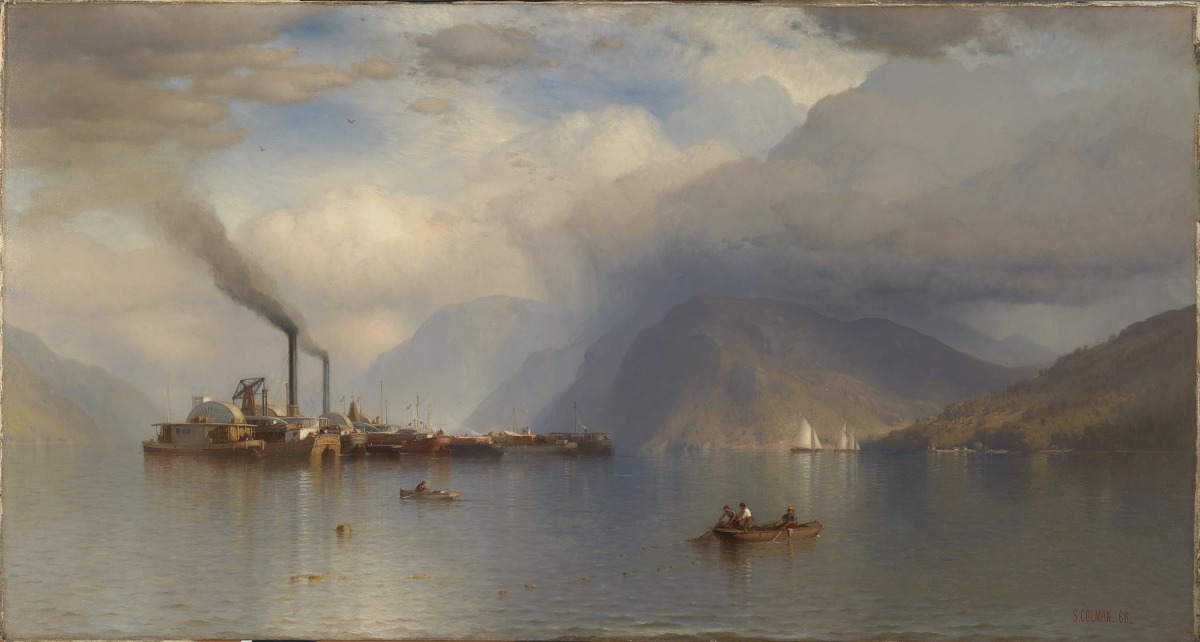
The remainder of the 1860’s and 1870’s were extraordinarily productive for Colman. In 1864 he held his first major sale at Snedecor Gallery, showing alongside painters Aaron Draper Shattuck and Jervis McEntee.18 Over the next few years he would paint major masterpieces, including Storm King on the Hudson. Then, just as he was reaching his zenith as an oil painter, he began to experiment with other media. In 1866 he cofounded the American Watercolor Society (then known as the American Society of Painters in Water-Colours) and became its first president.19 The same year, according to James David Smillie, he first began experimenting with “some little free-hand etchings.”20
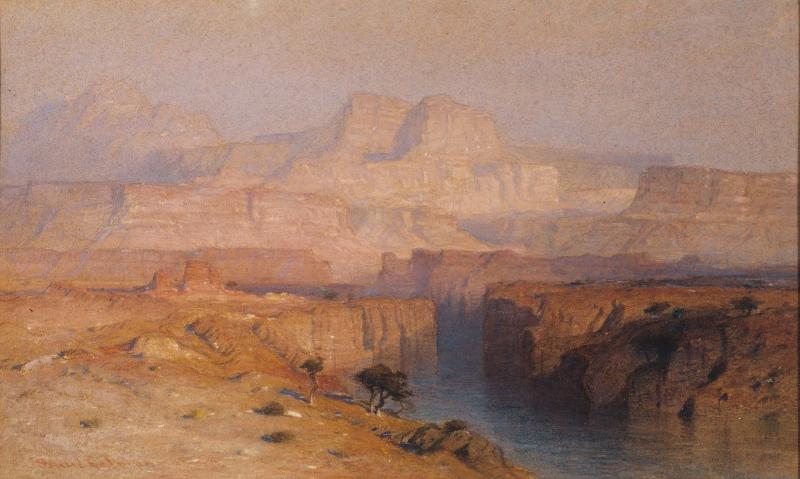
Colman and his wife traveled widely. Some of his most remarkable pictures, in both oil and watercolor, were inspired by trips to the American West. In 1870 they would travel as far west as the Yosemite Valley.21 In 1871 they visited Colorado and Utah.22 In 1872 they returned to Europe.23 This time Colman’s grand tour would not be cut short. They stayed three-and-a-half years, traveling across the continent and even into North Africa.
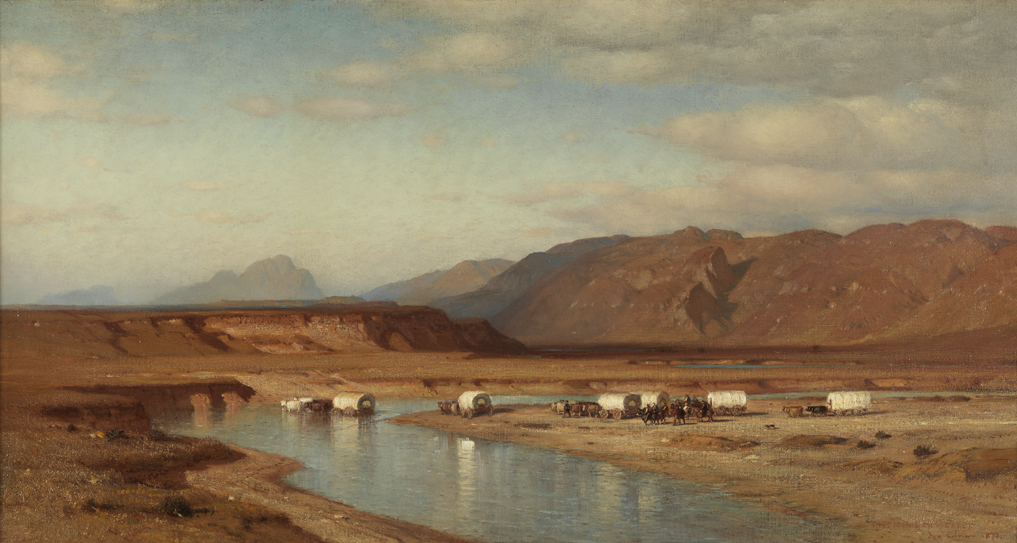
In 1875 Colman held a second major show at Snedecor Gallery.24 It was around the same time that he met the ultra-wealthy industrialist Henry Osborne Havemeyer. This relationship would profoundly alter the trajectory of the artist’s career. Colman would share with Havemeyer his burgeoning love of decorative arts, especially Asian pottery and textiles. Years later, Colman would collaborate with Louis Comfort Tiffany to design the interiors of Havemeyer’s landmark Manhattan mansion.25 Colman would himself amass a celebrated collection of Asian art, a portion of which he would later gift to the Metropolitan Museum of Art.26
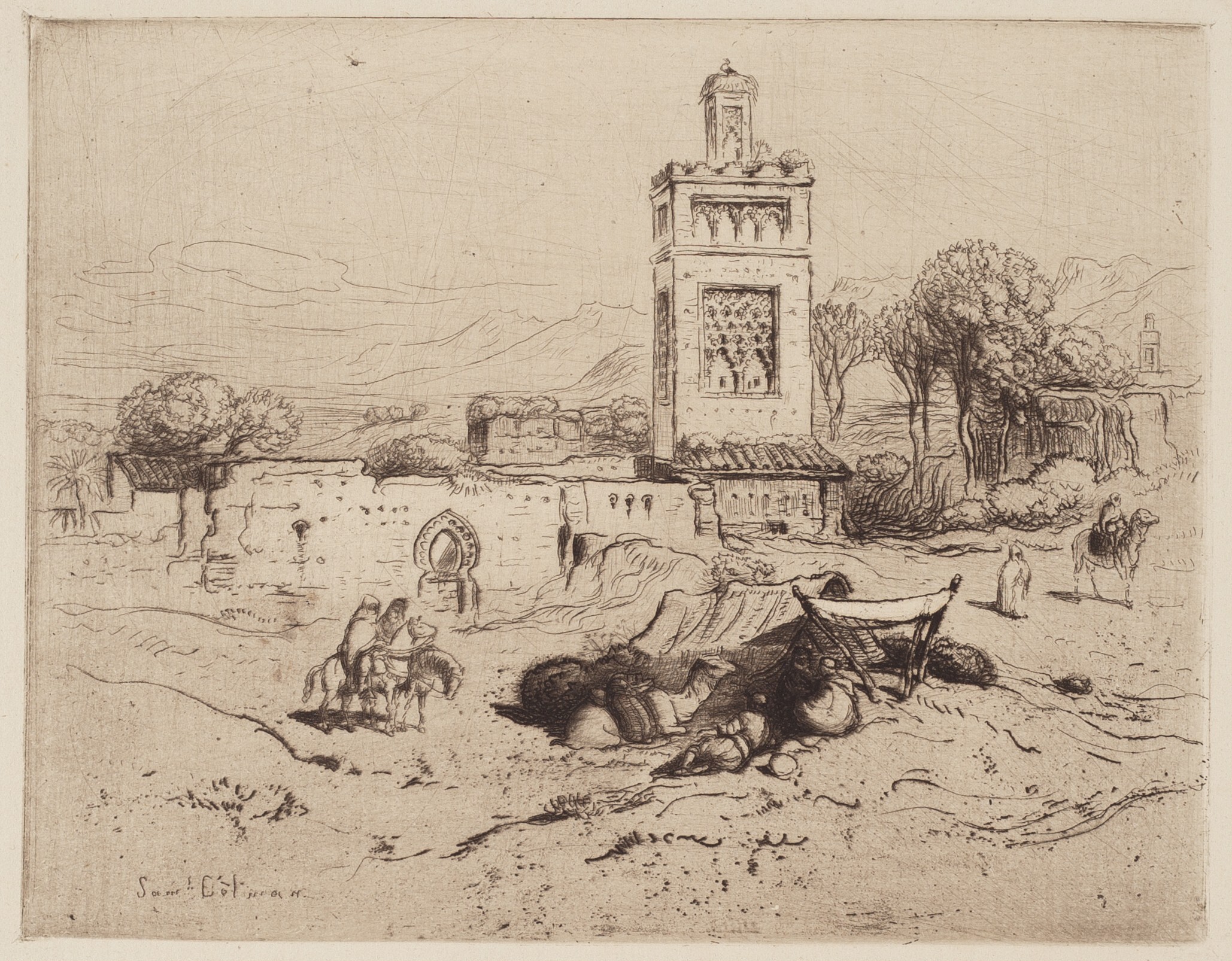
In 1877 Colman took up etching and became a founding member of the New York Etching Club.27 With the “etching revival” already well underway in France and England, and New York artists increasingly traveling abroad, it was only a matter of time before the trend reached New York. A prolific draughtsman, Colman seems to have been drawn to the spontaneity of etching. Many of his etchings have the loose, curvilinear style that is characteristic of his drawings, but very different from his oil paintings. While Colman would go on to etch more than fifty plates, his prints never achieved the same recognition as those of some of his peers, notably his close friends and traveling companions Thomas and Mary Nimmo Moran.
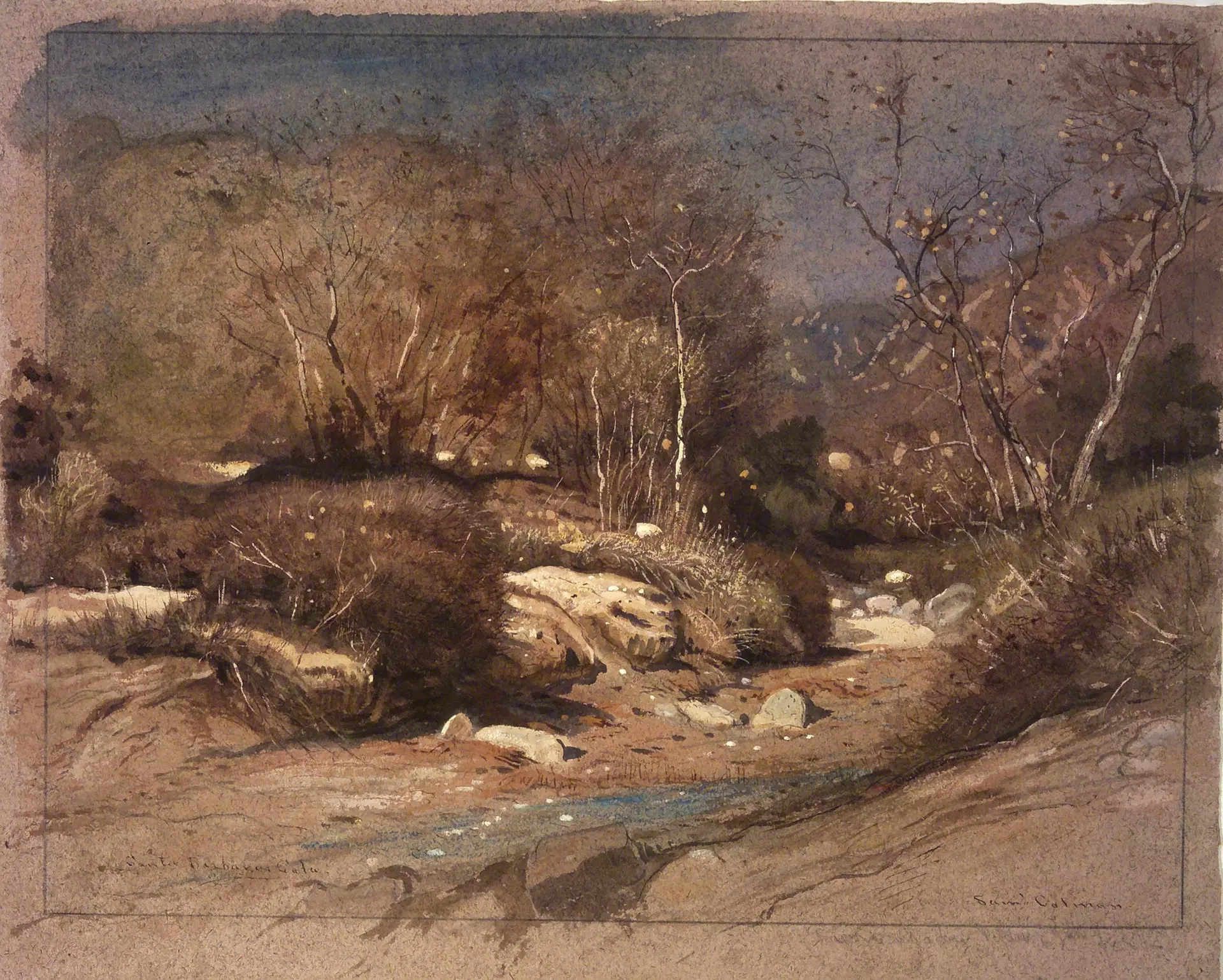
Colman continued to paint and etch throughout the 1880’s and 1890’s, though his output slowed as the end of the century neared. In 1884 he and his wife decamped from New York to an ornate home they had constructed in Newport, Rhode Island.28 Colman became more active as a decorator, working closely with Tiffany on the Havemeyer mansion and other projects.
Anne Colman died in July 1902 after a long illness. In a letter to James Smillie, Colman recounted the horror of his wife’s death, and a desperate desire for “a complete change from all I have known of friends or country.”29
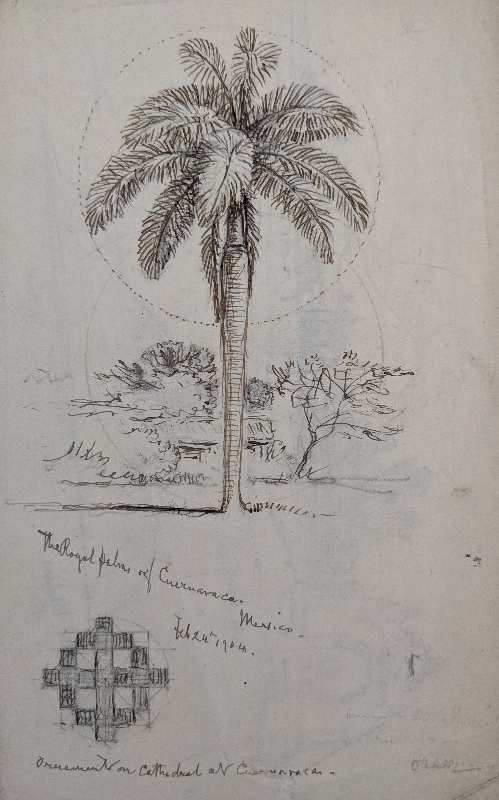
In 1903 Colman remarried to Lillian Margaret Gaffney, who was likely his wife’s nurse.30 They began to sell significant parts of Colman’s collections, including Asian art, paintings by other American artists, and his own paintings. The couple relocated to New York and sold the Newport house. They traveled together, first to Mexico and then to Canada. Colman produced many drawings and occasional watercolors documenting their journeys. Then, in 1908, they had a son, the third generation to be named Samuel.31
Colman devoted the final twenty years of his life to work on two books of art theory: Nature’s Harmonic Unity32 and Proportional Form.33 Neither was well-received and both are largely forgotten today.
In 1920, at the age of 88, Colman died in New York.34
After his death, Lillian Colman would continue to disperse her husband’s art and collections. In 1927 she sold a large collection at Anderson Galleries35 and in 1939 she donated more than 150 drawings to the Cooper Hewitt.36 The latter bequest remains the single largest collection of Colman’s work in a public institution.
As fashions changed, Colman would be largely forgotten. A 1976 article in the American Art Journal revitalized interest in his work.37 Two additional sales of work from the artist’s estate in 198138 and 198339 further rehabilitated the artist’s reputation.
Colman’s story is tightly threaded into the artistic developments of 19th century America. From the early days of the Hudson River School, to the etching revival, to his knack for satisfying the orientalist fashion of the robber barons, Colman was an important participant in the formation of American aesthetic culture.
Notes
Footnotes
-
Colman’s father was baptized as a Swedenborgian the year before he was born. He would go on to publish several books related to Swedenborgian faith, including a Life of Emanuel Swedenborg. See Willis, William. The History of Portland, from 1632 to 1864. Portland: Bailey & Noyes, 1865. ↩
-
Gale, Robert L. A Henry Wadsworth Longfellow Companion. Westport, CT: Greenwood Press, 2003. ↩
-
”Colman’s Literary Saloon.” The New York Herald, July 2, 1845. ↩
-
”About a month ago, Mr. Cole…,” New-York Evening Post, Nov. 22, 1825. ↩
-
United States Census, 1850, New York, digital image, FamilySearch. ↩
-
”Death of Wm. A. Colman,” New-York Evening Post, Jan. 29, 1850. ↩
-
National Academy of Design Exhibition Record, 1826–1860. New York: J. J. Little & Ives Co., 1943. ↩
-
”Samuel Colman,” National Academy of Design, https://nationalacademy.emuseum.com/people/248/samuel-colman. ↩
-
Aaron Draper Shattuck papers, 1810–1983. Archives of American Art, Smithsonian Institution. ↩
-
Ackerman, Gerald M. American Orientalists. Paris: ACR, 1994. ↩
-
”American Painters. Samuel Colman, N.A.” The Art Journal, vol. 2 (1876): 264–66. New York: D. Appleton & Company. https://www.jstor.org/stable/20568950. ↩
-
Samuel Colman to Samuel Emerson Howard, March 12, 1861, Box 1, Folder 1, Samuel Colman Papers, 1855-1901, Archives of American Art, Smithsonian Institution, Washington, D.C. ↩
-
”Civil War Biographies: Colman–Constantine,” Green-Wood Cemetery, https://www.green-wood.com/2015/civil-war-biographies-colman-constantine/. ↩
-
”Married,” The New York Times, Aug. 22, 1862. ↩
-
The precise nature of Colman’s relationship to Tiffany in the 1860s is difficult to ascertain. Some sources claim Colman was Tiffany’s teacher, and Tiffany’s early work does suggest Colman’s influence, but no evidence of a formal relationship has been cited. Regardless of whether or not the young Tiffany was Colman’s student, they must have seen each other frequently. The Dunham and Tiffany families were connected through their estates in Irvington, multiple marriages, and shared business interests. Perhaps more importantly, Tiffany began studying at the National Academy of Design in 1866, where Colman had been made a full member two years earlier. ↩
-
”Samuel Colman,” National Academy of Design, https://nationalacademy.emuseum.com/people/248/samuel-colman. ↩
-
”Century Association Biographical Archive: Earliest Members of the Century Association,” Century Association Archives Foundation, 2021, https://centuryarchives.org/caba/bio.php?PersonID=625. ↩
-
Catalogue of a Choice Collection of Original Pictures by Jervis McEntee, S. Colman, and A. D. Shattuck. New York: Bloom & Smith, 1864. ↩
-
Foster, Kathleen A. American Watercolor in the Age of Homer and Sargent. Philadelphia: Philadelphia Museum of Art, 2017. ↩
-
Sylvester Rosa Koehler, in The American Art Review (1880), quotes Colman as saying he first took up etching in 1867, but Smillie’s diary records that saw some of Colman’s etchings a year earlier, in May 1866. Colman goes on to say he stopped etching “on account of difficulty in having plates printed in a satisfactory manner” until the formation of the New York Etching Club ten years later. For Smillie’s diaries see “May 28-29, 1866,” The Diaries of James David Smillie, https://smilliediaries.com/#1866/0071 ↩
-
Colman often painted locations he visited years earlier, making it difficult to determine which places he visited on a particular trip. In this case, at least two drawings of Yosemite have surfaced that are clearly dated “May 1870.” For one example see “Samuel Colman (1832–1920), California, Yosemite National Park,” Arader Galleries, https://aradergalleries.com/products/samuel-colman-1832-1920-california-yosemite-national-park. ↩
-
Samuel Colman to James D. Smillie, June 5, 1871, Box 1, Folder 4, James D. Smillie and Smillie Family Papers, 1853–1957, Archives of American Art, Smithsonian Institution, Washington, D.C. ↩
-
Samuel Colman, U.S. Passport Application, 1872, digital image, FamilySearch, https://familysearch.org/ark:/61903/3:1:3QS7-99DC-FL1V. ↩
-
”Mr. Samuel Colman’s Paintings,” The New York Times, Dec. 19, 1875. ↩
-
Frelinghuysen, Alice Cooney, et al. Splendid Legacy: The Havemeyer Collection. New York: Metropolitan Museum of Art, 1993. ↩
-
”List of Donations of Works of Art: During the Year 1893,” Annual Report of the Trustees of the Metropolitan Museum of Art, no. 24 (1893): 580–81, http://www.jstor.org/stable/40303101. ↩
-
The New York Etching Club Minutes: November 12, 1877, through December 8, 1893, ed. Stephen A. Fredericks. Houston: Rice University Press, 2009. ↩
-
Meredith, Mark. “Boxcroft,” HouseHistree, Mar. 5, 2021, https://househistree.com/houses/boxcroft. ↩
-
Samuel Colman to James D. Smillie, August 12, 1902, Box 1, Folder 4, James D. Smillie and Smillie Family Papers, 1853–1957, Archives of American Art, Smithsonian Institution, Washington, D.C. ↩
-
Ms. Gaffney is listed in the 1900 census as a professional nurse living in a boarding house just a few blocks from the Colmans’ home. A typewritten note attached to the Samuel Colman papers in the Archives of American Art describes her as “his trained nurse.” Given the timing, it seems far more likely she was Anne’s nurse. ↩
-
”New York, New York City Births, 1846–1909,” FamilySearch, entry for Samuel Colman, 4 February 1908, Manhattan, New York; citing Digital Folder 004206407, Microfilm 1991979, Image 1871, https://www.familysearch.org/ark:/61903/1:1:2WC8-6Y3 (accessed March 15, 2026). ↩
-
Colman, Samuel. Nature’s Harmonic Unity. New York: G. P. Putnam’s Sons, 1912. ↩
-
Colman, Samuel. Proportional Form. New York: G. P. Putnam’s Sons, 1920. ↩
-
”Samuel Colman, Painter, Dies at 88,” The New York Times, Mar. 30, 1920. ↩
-
The Art Collections of the Late Samuel Colman, N.A. New York: Anderson Galleries, 1927. ↩
-
”Mrs. Samuel Colman,” Cooper Hewitt, Smithsonian Design Museum, https://collection.cooperhewitt.org/people/18536705/. ↩
-
Craven, Wayne. “Samuel Colman (1832–1920): Rediscovered Painter of Far-Away Places.” The American Art Journal, vol. 8, no. 1 (May 1976): 16–37. ↩
-
Samuel Colman: East and West from Portland. Portland: Barridoff Galleries, 1981. ↩
-
The Romantic Landscapes of Samuel Colman at Kennedy Galleries. New York: Kennedy Galleries, 1983. ↩